Review: Picasso -Designed by Paul Smith
October 10, 2026 – February 1, 2027
Overview: The first solo exhibition of Pablo Picasso’s work in Aotearoa New Zealand in over 30 years. Features over 80 original works (paintings, sculptures, drawings, prints, and ceramics) on loan from the Musée national Picasso–Paris. The gallery spaces are uniquely styled in collaboration with British fashion designer Sir Paul Smith, featuring sensory-rich rooms and his signature stripe aesthetic.
What can be said about Pablo Picasso which hasn’t been said before? I have a small stack of books of his art, but have rarely seen his works in real life.
So, much of the pleasure of the exhibition was being able to get close to the works and look at all their physical details.
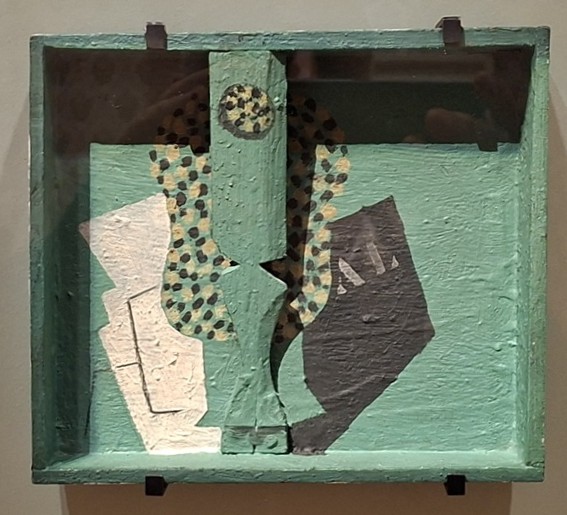
In the early twentieth century Picasso was one of the leaders of the fast paced movements that the visual arts went through, most notably Cubism.
But his work was almost always personal, and this exhibition which spans much of Picasso’s life highlights this.
By the end of his neo-classical period in the 1920s, Picasso had gone beyond formulism for its own sake (ie a strict focus on structure, appearance, or technical rules rather than external context, personal feelings, or deeper real-world meanings), and every work he created from there on, was primarily driven by whatever his interest or passion was at the time, using whatever technique and style took his fancy, and this is what stands out for me in this exhibition.
For example, you see elements of Cubism in his works from the 1940s but they are not strictly speaking Cubist works.
Ultimately, Picasso took joy in living and creating art, the personal things in his life, and any subject matter that interested him, and used whatever style and medium felt best to express these with.
Because of his mercurial personality, Picasso’s work went in many directions, but familiar themes and subjects appeared regularly throughout the decades.
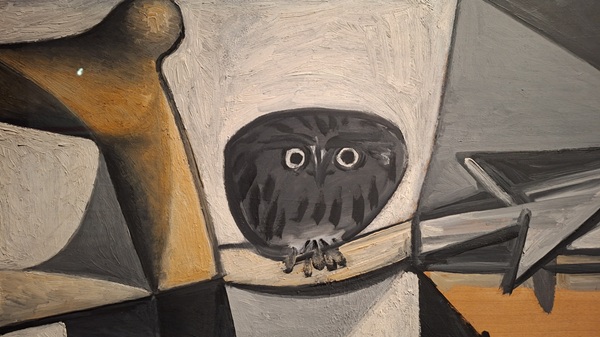
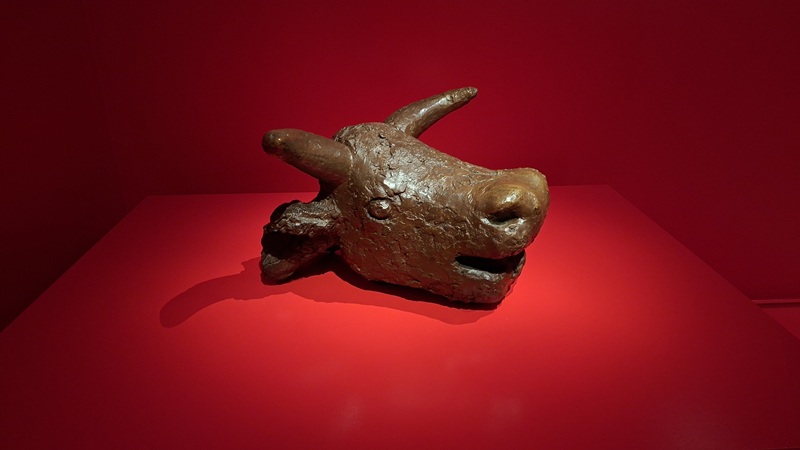
One of the most charming for me is his love of certain animals, such as the owl, bull and goat, and his spiritual connection to older Mediterranean cultures.
There are a good number of twentieth century artists, architects and designers who could claim a greater influence on the asthetics of everyday life during the twentieth century.
But as a totem of Modernism, Picasso reigned supreme in the public imagination.